
Protecting your customers’ personal data is a legal requirement under the PDPA law that businesses of all sizes must comply with. CIPHER understands this importance well, so we’ve compiled the essential aspects of PDPA law in this article to help you understand and adapt your business to comply with the Personal Data Protection Act correctly.
Table of Contents
What is PDPA?
PDPA (Personal Data Protection Act) is a law designed to protect citizens’ personal data. It establishes rules, procedures, and conditions for collecting, using, and disclosing personal information. This law empowers data owners to control their own information and requires organizations that collect or use personal data to obtain consent and handle the information appropriately.
Background of PDPA Law
PDPA, or the Personal Data Protection Act, emerged from the need to protect data in the digital age. It was officially announced in the Royal Gazette on May 27, 2019, and came into full effect on June 1, 2022, after several postponements to allow organizations time to adapt. This Personal Data Protection Act is comparable in importance to the EU’s GDPR, which is considered a global standard for personal data protection. Understanding the importance of personal data protection laws will help businesses establish correct compliance practices.

Why is PDPA Important for Today's Businesses?
Lorem ipsum dolor sit amet, consectetur adipiscing elit. Ut elit tellus, luctus nec ullamcorper mattis, pulvinar dapibus leo.
Currently, PDPA law is important for organizations of all sizes because it:
- Builds customer confidence when they know their data is well-protected
- Prevents financial and reputational damage from data breaches
- Raises internal organizational standards for greater transparency
- Creates a competitive advantage when you can demonstrate to customers that your business cares about their privacy
- Respect their privacy.
Compliance with the Personal Data Protection Act is not just about following the law but also about elevating your business standards to be more credible in the eyes of modern consumers, who increasingly value the Personal Data Protection Act and data security.
What Types of Personal Data are Protected Under PDPA?
General Personal Data
General personal data refers to information that can identify an individual either directly or indirectly, such as:
- First and last name
- Address
- Phone number
- ID card number
- Passport number
- Location data
- IP Address
- Cookie ID
Although these types of personal data may seem basic, they can be used to identify individuals and connect to their behaviors, thus requiring strict protection under PDPA law.
Sensitive Personal Data
Sensitive personal data requires special care under the Personal Data Protection Act, including:
- Racial or ethnic origin
- Political opinions
- Religious beliefs
- Genetic data
- Biometric data (such as fingerprints, facial recognition)
- Criminal records
- Health data
- Sexual behavior data
Collecting and using this type of personal data requires explicit consent from the data owner and particularly stringent protective measures, as specified by the Personal Data Protection Act.
What Are the Key Components of PDPA?
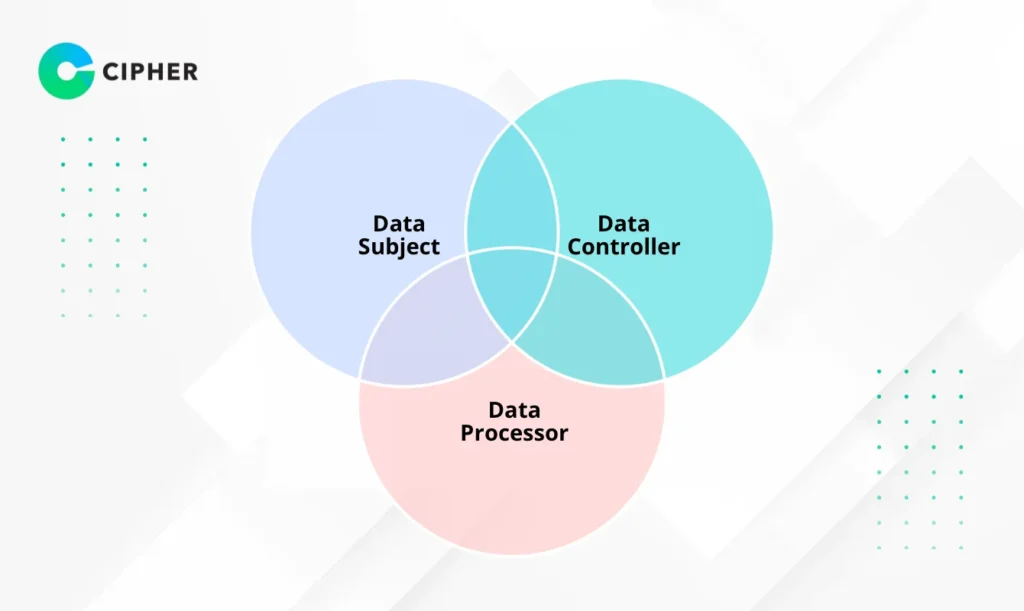
Understanding the components of PDPA can be summarized as involving three main parties:
- Data Subject – The individual who owns the personal data, with rights to control and make decisions about their information
- Data Controller – A person or legal entity with the authority to make decisions regarding the collection, use, or disclosure of personal data, such as a company that collects customer data
- Data Processor – A person or legal entity that processes, collects, uses, or discloses personal data according to the data controller’s instructions
Additionally, PDPA summarizes important rights of data owners as follows:
- Right to access data
- Right to correct data
- Right to be forgotten
- Right to withdraw consent
- Right to restrict processing
- Right to data portability
- Right to object to data processing
These components are interrelated and have different responsibilities under the Personal Data Protection Act. Businesses must clearly understand their role to comply with PDPA correctly.
5 Steps to PDPA Compliance
Step 1: Survey and Inventory Your Data
What are the first steps required under the PDPA? Data collection must obtain consent from the data subject, with the purpose of data collection clearly stated. The necessary steps include:
- Create a clear and easy-to-understand privacy policy.
- Monitor the management of websites, applications, and services from third parties.
- Map where you store the data and who can access it
Data collection must be limited to what is necessary for the stated purpose. Excessive data collection should be avoided, in accordance with the Privacy Act.
Step 2: Establish a Lawful Basis for Processing Data
PDPA requires that every data processing activity must be based on at least one of these legal foundations:
- Consent from the data subject
- Contract fulfillment
- Legal obligations
The processing of sensitive data requires explicit written consent, as summarized in the key principles of the PDPA.
Step 3: Personal Data Security Measures
PDPA emphasizes that data security is at the heart of the law. Businesses must:
- Implement appropriate security measures
- Have an effective data encryption system
- Limit data access rights to only relevant personnel
- Develop a plan to handle data breaches
Data security is not just about technology but also includes work processes and staff training to ensure everyone in the organization recognizes the importance of personal data protection laws.
Step 4: Personal Data Transfer or Disclosure
What must be done under PDPA when transferring or disclosing data? Transferring or disclosing data to third parties requires prior consent from the data owner, especially for international transfers which have special requirements. Businesses should:
- Verify that the destination country has adequate data protection standards
- Have clear contractual agreements regarding data protection
- Keep records of all data transfers or disclosures
Disclosure without consent is only permissible in specific cases defined by the Personal Data Protection Act, such as to prevent or stop danger to life.
Step 5: Personal Data Governance
What must be done under PDPA for governance? Governance is an ongoing process where businesses must:
- Appoint a Data Protection Officer (DPO) for organizations that process large volumes of data
- Create and regularly update data protection policies
- Enable data owners to conveniently exercise their rights, such as accessing, correcting, deleting, or transferring their data
Good governance helps organizations adapt to changes in PDPA law and technology.
Penalties You May Face for Non-Compliance with PDPA
Civil Penalties
Criminal Penalties
Administrative Penalties
Beyond legal penalties, violating PDPA also damages a business’s reputation and customer confidence, which can result in long-term business impacts that are difficult to quantify.
CIPHER Helps Develop Your Website to Comply with PDPA
PDPA Consultation for Businesses and Websites
Our expert team is ready to help you with every step related to PDPA requirements:
- Analyze data collection and usage on your website, registration forms, membership systems, or CRM in detail
- Provide guidance on creating legally compliant Privacy Policy, Terms & Conditions, and Cookie Policy
- Design consent processes that align with PDPA standards
We don’t just recommend theory but help you implement practical solutions based on our expertise in serving clients across various industries.
Develop and Design PDPA-Compliant Websites
Beyond consultation, we also develop websites that meet both business and legal requirements:
- Design websites with modern and user-friendly Cookie Consent notifications
- Design data collection forms following Privacy by Design principles to ensure compliance with the Personal Data Protection Act from the start
- Support SSL, HTTPS, data encryption, and secure storage systems according to PDPA requirements
Your website will not only be attractive and easy to use but also secure and compliant with PDPA law.
Set Up Customer Data Storage and Processing Systems (Data & CRM System)
We help establish comprehensive data management systems as summarized by PDPA:
- Create back-end systems for organized customer data storage
- Configure automatic data deletion, consent renewal, and systems supporting the right to be forgotten
- Connect with third-party systems like Email Marketing, Line OA, and Facebook Pixel while considering PDPA personal data principles
Systems designed by CIPHER will help your business manage customer data efficiently and legally, ready to adapt to future changes in the Personal Data Protection Act.
Conclusion
PDPA law is an opportunity for businesses to raise standards for customer data protection, build confidence, and gain a competitive advantage. PDPA is a law that protects both consumers and businesses in the long term. Strict compliance with the Personal Data Protection Act is therefore a worthwhile investment.
CIPHER stands by you at every step of adapting to PDPA compliance, from consultation, website development, and secure data management systems to comprehensive marketing services to help your business grow securely and sustainably in the digital era.