
Have you ever wondered why we access websites with easy-to-remember names instead of long numbers? This is due to the domain name system that makes navigating the internet more convenient and accessible. In this article, CIPHER, experts in software development and IT solutions, will guide you through what a domain name is, how it works, its types, important business benefits, and techniques for creating an interesting domain name. Let’s explore together!
Table of Contents
What is a Domain Name?
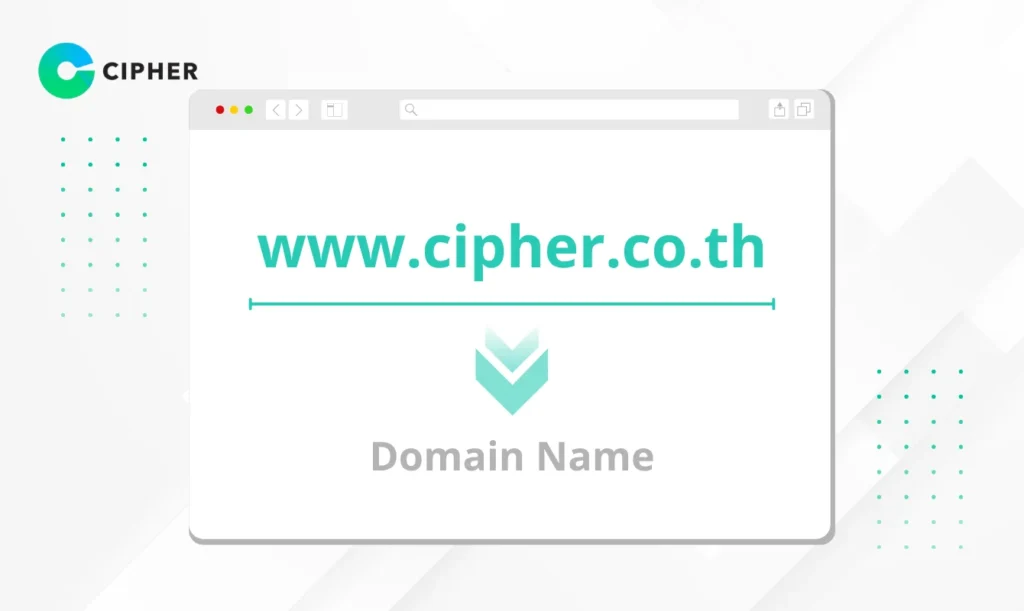
What is a Domain Name in the simplest terms? A domain name is like a “house address” for websites on the internet that we create to help people remember and access our website easily, instead of using IP addresses that are long strings of numbers and difficult to memorize.
For example, when you type www.cipher.co.th into your web browser, the domain name system translates this name into the actual IP address to take you to the destination website. A domain name refers to a unique name that is not duplicated in the online world. Besides being used for websites, domain names can also be used with organizational emails, such as yourname@cipher.co.th.
Domain registration is an important first step in creating an online identity that helps your customers or target audience find and access your business conveniently and quickly. It also plays a part in making your website easily searchable and benefits effective SEO implementation.

What is the Structure of a Domain Name?
Before learning how to create a domain suitable for your business, we should understand what components make up a domain name. The structure of a domain name consists of the following key elements:
- Protocol – The front part, such as http:// or https://, which acts as a universal language for communication between computers, helping different systems understand each other.
- Domain Name – The middle part that is the specific name of the website, can consist of letters, numbers, and hyphens (-), but cannot use other special symbols. Generally, it has a length of 2-63 characters, divided into 3 sub-parts:
- Subdomain (e.g., www. or blog.)
- Second-level Domain (e.g., cipher)
- Top-level Domain (e.g., .com, .co.th)
- Path – The part after the domain name used to specify particular pages or content on the website, such as /services or /blog/domain-name-guide
How does a domain name work? When you type a website name into your browser, the domain name system functions like a phonebook for the internet, converting the text-based name into an IP address that computers understand. This allows the browser to connect correctly to the server storing that website’s data.
What Types of Domain Names Are There?
Second-level Domain Name
Second-level domains have a structure consisting of the domain name + domain type, such as .com, .net, .org, without a country code suffix. These are commonly used internationally or for websites that want to reach users worldwide.
Examples of second-level domains include:
- www.google.com
- www.youtube.com
- www.cipher.com
Each suffix has a specific meaning:
- .com – For business or commercial organizations (most popular)
- .net – For network organizations
- .org – For non-profit organizations
- .edu – For educational institutions
- .gov – For government agencies
Third-level Domain (Sub-domain)
Third-level domains have a structure consisting of the domain name + organization type + country code, which immediately tells users which country the website is from and what type of organization it is.
Examples of third-level domains include:
- www.cipher.co.th
- www.chula.ac.th
- www.thaigov.go.th
Each suffix has a specific meaning:
- .co.th – For companies or commercial organizations in Thailand
- .ac.th – For educational institutions in Thailand
- .go.th – For Thai government agencies
- .or.th – สำหรับองค์กรไม่แสวงผลกำไรในไทย
- .in.th – For individuals and all types of organizations in Thailand
What Are the Benefits of Domain Names for Business?
1. Increases Formality and Professionalism
2. Increases Credibility
A domain name is verified and certified by a trustworthy authority. Having your own domain confirms that your business has a real identity and has gone through the proper registration process. This helps build customer confidence that they are dealing with a credible organization, not a fraudulent website or one without an identity, making it a trustworthy website.
3. Helps with Brand Recognition
4. Increases Security and Prevents Impersonation
5. Helps Identify Which Company or Organization a Person Belongs To
Techniques for Creating Interesting Domain Names
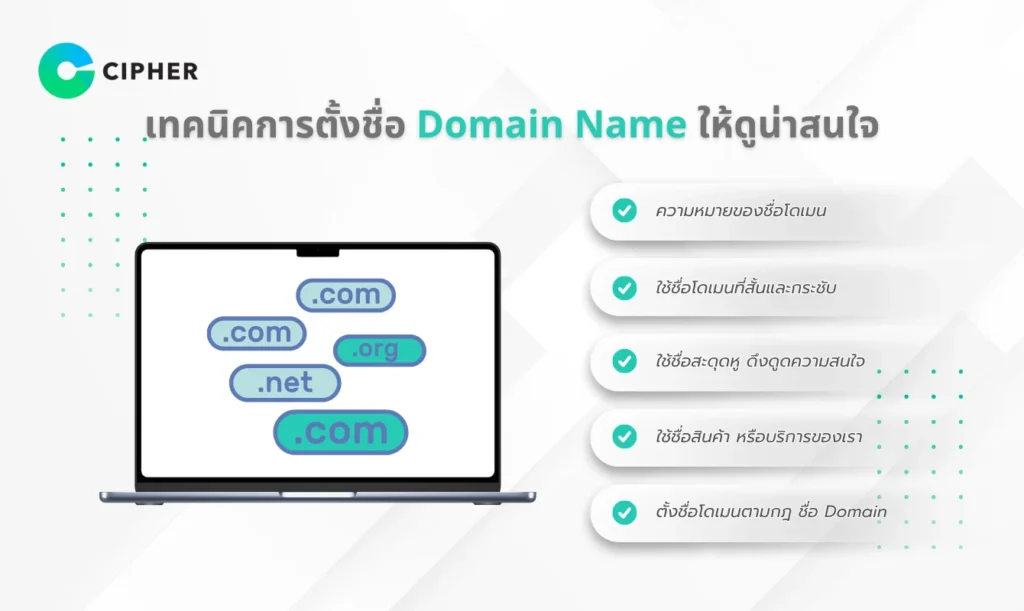
Creating an effective domain isn’t just about choosing a name you like but also considering important principles that will make your domain name stand out and memorable:
- Domain Name Meaning – Choose a name that reflects your business, product, or service so users immediately understand what the website offers. A name with clear meaning will be easier to remember and will instantly communicate your business purpose.
- Use Short and Concise Domain Names – Shorter domain names are easier to remember than longer ones. Try to make your name concise, easy to spell, and memorable. Avoid using words that are difficult to spell or that have multiple spelling variations to prevent confusion when customers want to access your website.
- Use Attention-Grabbing, Memorable Names – Creative, unique, or specially meaningful names will attract attention and make people remember them more easily. You might use words related to your industry but present them from a different or creative perspective.
- Use Product or Service Names – If your brand or service is already well-known, using the same name as your domain will reinforce brand recognition and increase the chances of customers finding you easily. For example, if your shop is called “Sweet Café,” using the domain sweetcafe.com will immediately connect with the brand.
- Follow Domain Name Rules – You must comply with technical requirements, such as using only numbers, letters, and hyphens (-). No other special characters are allowed. The length should be between 2-63 characters, and you should avoid using hyphens at the beginning or end of the name.
Professional Domain Name Creation Service - CIPHER Offers Comprehensive Support
At CIPHER, we have experience in creating domains and developing websites for leading organizations. We understand the importance of domain names to your business image and success.
With our team of domain name and website experts, we’re ready to advise and help you from choosing the right domain name, registration, through to setting up domain name systems and developing websites that meet your business needs.
Our services don’t just help you register a domain but also include consulting on choosing a domain name that matches your business and goals, helping your website rank in SEO, and developing a website that works on all devices. Whether you’re a small, medium, or large business, CIPHER is ready to provide services and support your online business to grow steadily and sustainably.
Conclusion
What is a domain name? As we’ve learned throughout this article, a domain name is like a “digital address” that makes it easy for people to remember and access your website. Having your own domain increases credibility and professionalism, prevents impersonation, and creates good brand recognition.
Choosing a domain name that is short, concise, represents your business, and follows domain name system rules correctly will help your online business stand out, be accessible, and grow sustainably. CIPHER is ready to be your expert in consulting and helping you create a domain suitable for your business comprehensively, from choosing a domain name to developing a website and maintaining the system long-term.

Frequently Asked Questions
What is Domain Registration and What Are the Steps?
Domain registration is the process of officially registering a website name as yours. The main steps are:
- Think of a unique domain name
- Check if that name is available
- Choose a domain suffix (.com, .co.th, etc.)
- Select the registration period
- Pay the service fee and Fill in complete registrant information