
Inbound Strategy

Inbound Strategies : Attract

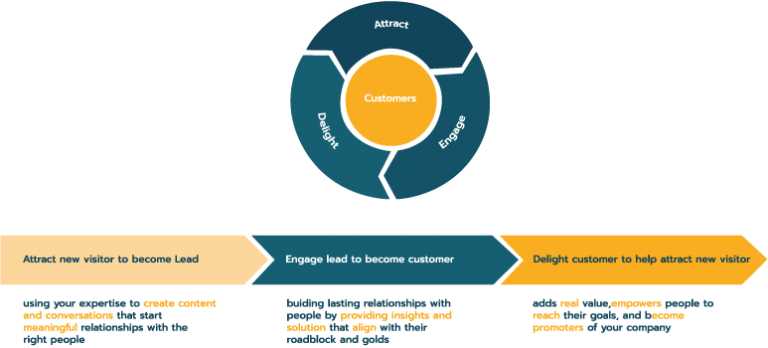
The principle of Inbound Marketing, which is customer-centric, consists of several steps, starting with attracting the target audience who are not familiar with us, to become visitors and come across us. Attracting is about converting strangers who don’t know the brand into visitors who enter your website through content creation and SEO keywords, allowing the target audience to find you via search engines, or by posting content on social media that aligns with the target audience’s needs or desires.
Inbound Strategies : Engage

Engage is about interacting with the right prospects at the right time to close a sale. Before closing a sale, it is necessary to build a relationship and gather information about the prospect’s needs so that when they are ready, we can present a solution to their problem, increasing the chances of closing the sale. This information is gathered through CRM (Customer Relationship Management), collecting customer data via forms and Calls-To-Action on the website.

Inbound Strategies : Delight

Delight is a strategy focused on ensuring that customers and prospects are always happy and satisfied throughout their relationship with our brand, including providing customer support even after a sale is closed. The goal is to build a relationship and create opportunities for customers to repurchase or refer others within similar target groups who may also become our customers. In this strategy, your team must be experts who can offer advice and support whenever needed, such as through surveys, live chat, social monitoring, and creating additional smart content for existing customers.
Frequently Asked Questions

What is Inbound Strategy?

Inbound Strategy is a marketing approach focused on naturally attracting customers through quality content, targeted communication, and building sustainable relationships without pushy sales tactics.

Why start with Attract?

The Attract stage aims to convert strangers into visitors by creating valuable content such as SEO articles or social media posts, making it easier for target audiences to find and become interested in visiting our website.

What types of content work best in the Attract stage?

Useful content that matches the search queries of your target audience, such as blog articles, videos, infographics, and social media posts, helps increase visibility and attract new visitors.

How is the Engage stage different from Attract?

Attract focuses on drawing strangers to become visitors, while Engage involves creating deeper interactions, such as completing forms, downloading e-books, or connecting through live chat, to collect information and build relationships that can lead to sales.

Why is CRM important in the Engage stage?

CRM (Customer Relationship Management) helps collect customer data including interests, needs, and behaviors, enabling businesses to present more personalized offers that resonate with customers and increase sales opportunities.

How is Delight different from Engage?

Engage focuses on creating sales opportunities, while Delight emphasizes creating positive post-purchase experiences through consultation, after-sales service, and continuous support to ensure customer satisfaction and encourage repeat purchases.

How does Delight benefit businesses?

Delight helps build brand loyalty and increases the chances of word-of-mouth referrals, allowing businesses to gain new customers through efficient word-of-mouth marketing.

What tools are used in the Delight stage?

Examples include conducting feedback surveys, providing immediate assistance through live chat, social media monitoring for quick responses, and smart content customized specifically for existing customers.

How is Inbound Strategy different from Outbound Marketing?

Outbound often uses intrusive advertising such as telemarketing or banner ads, while Inbound focuses on providing value first to voluntarily attract customers, making them more receptive.

What types of businesses are suitable for Inbound Strategy?

Almost all businesses can use it, especially those looking to build long-term brand recognition, such as e-commerce, B2B, education, or service businesses, as Inbound Strategy primarily emphasizes the relationship between brands and customers.
Shopping Cart
Scroll to Top